Agency pitches
One Tactic Won Her Agency a $2.5 Million Account. Here’s How.
Sheryl Brown’s marketing agency pitches against firms that do the same work, and do it well. She credits one tactic from Storyteller Tactics with the pitch the client couldn’t say no to.
 By Charles Burdett · 4 min read
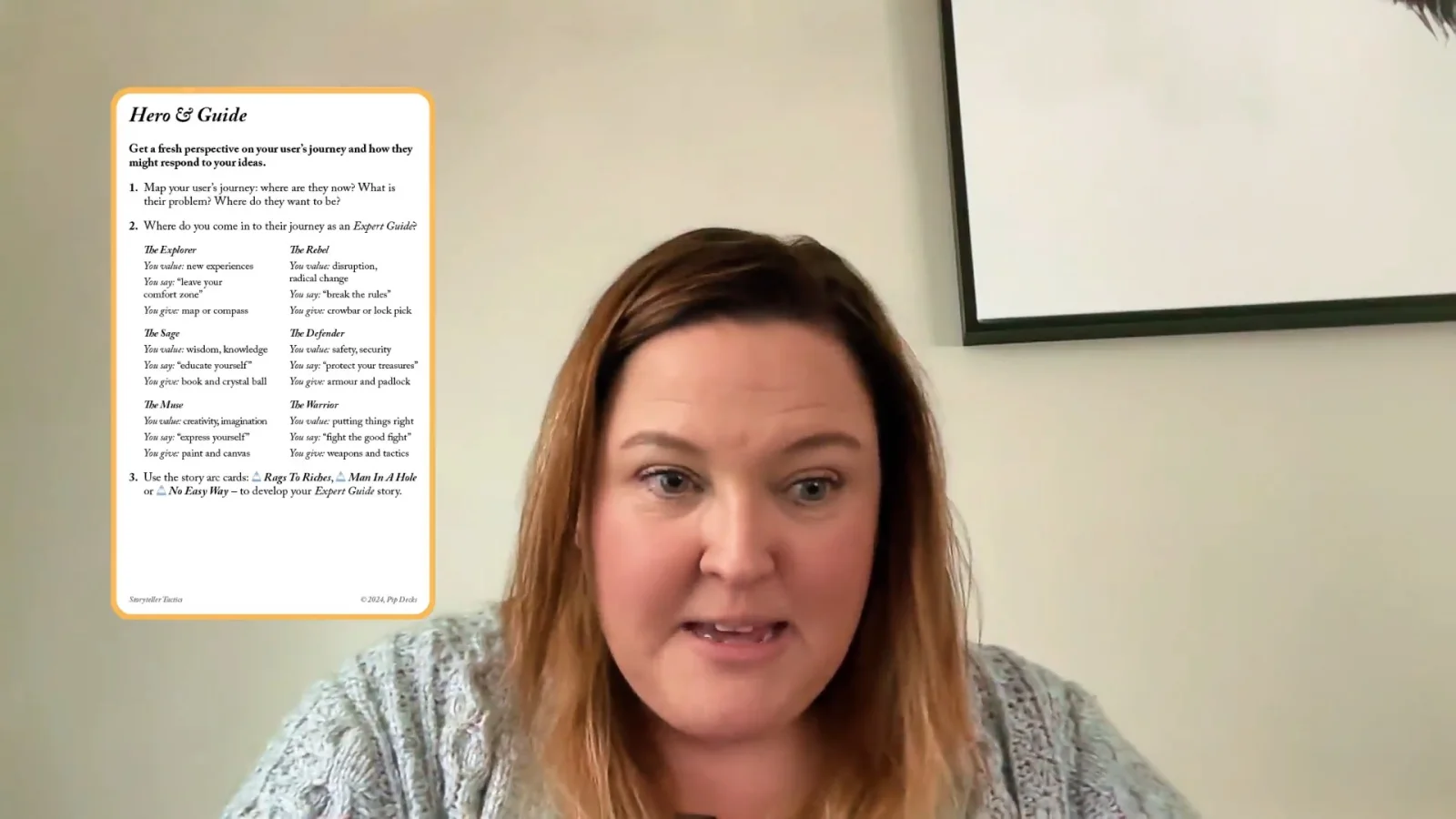
At the end of the pitch, the client spoke first. “This is such a great approach,” they said. “You covered every single thing. We don’t even have any questions for you at this point.”
Sheryl Brown owns a marketing agency, and that pitch won it a $2.5 million account. She credits one tactic from a printed deck of storytelling tactics.
Every agency in the room is good
Her problem will sound familiar to anyone who sells their expertise. “Within my industry, the competition is fierce, and we all do the same things,” Brown says. “And we all do it well because we are all professionals.”
Clients see it too. A 2025 report called What Clients Think, built on 680 interviews with the clients of agencies, found that clients find it hard to tell agencies apart. And when a client sees a group of agencies as the same, the Design Business Association wrote in its summary of the report, “they will choose on price.”
Losing on price costs more than the fee. Pitches take time. In Britain, the average public relations agency pitches 27 times a year and spends 62 hours on each one, according to a 2022 study for the PRCA, the industry’s trade body. That is more than a working week and a half for every pitch, won or lost.
So Brown went looking for an answer to one question. “So how do you differentiate yourself from everyone else when you’re doing the same thing?”
The deck she found
“And so I was on the hunt for some tools,” Brown says. “That is how I discovered Storyteller Tactics.”
Storyteller Tactics is a printed deck of tactics for telling stories at work, written by Steve Rawling. Each tactic is one way to tell a story, with its steps printed on the back. It has sold over 250,000 copies worldwide. Pip Decks, which makes it and publishes this journal, has sold over half a million decks in all.
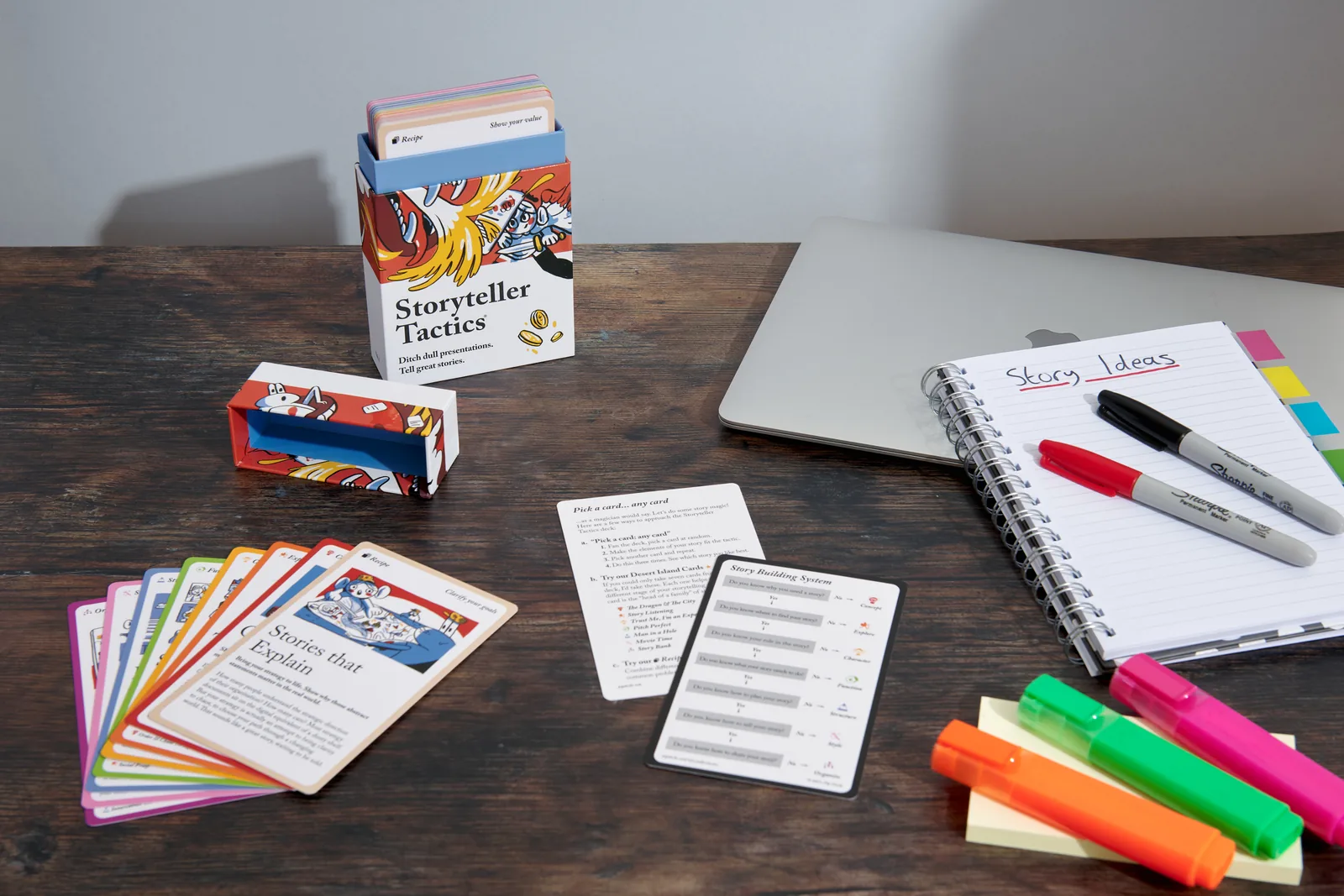
Brown liked how plain it is. “It really helps you,” she says, “to make decisions on how best to communicate based on the type of audience that you have. It’s so user friendly for anyone really.”
The tactic that fit her client
Brown’s client at the time had real challenges. When she reached Hero & Guide, she knew she had her tactic. “This one spoke to me because of the challenges that this client was having,” she says.
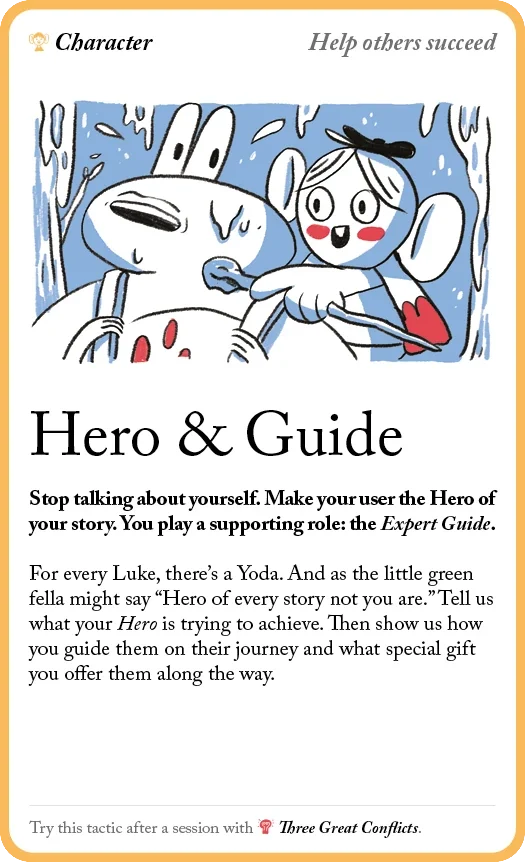
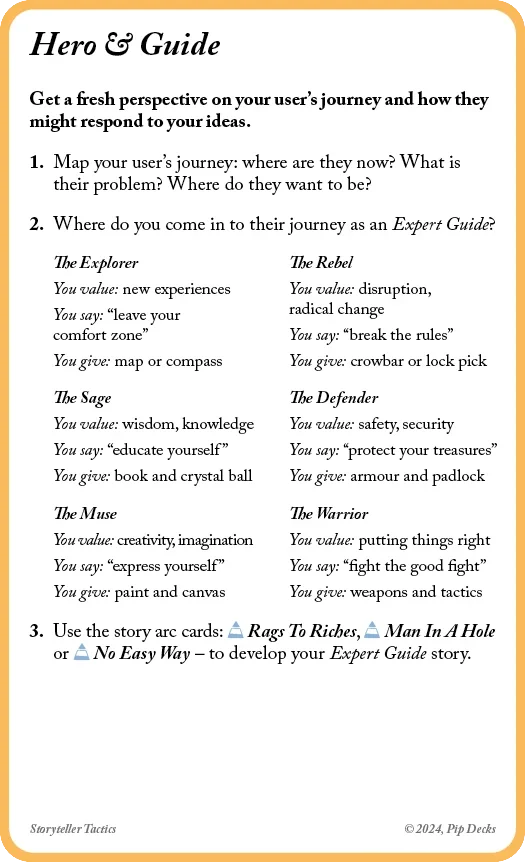
“I was like, that’s it,” she says. “I need to make them the hero of this story that we’re gonna tell.”
So the pitch became a story, and the client was its hero. Her team told it mostly in pictures.
“Our entire presentation was mostly imagery because I was telling a story.”
Sheryl Brown
Make the client the hero
The idea behind Hero & Guide is simple. For every Luke Skywalker, there is a Yoda. Your client is the hero of the story. You are the expert guide who helps them win. The tactic puts it plainly: “Stop talking about yourself.”
The back of the tactic gives three steps. First, map the client’s journey. Where are they now? What is their problem? Where do they want to be?
Second, choose your role as their guide. The tactic offers six, from the Sage who brings wisdom to the Warrior who puts things right. Third, shape it all into a story arc with Rags To Riches, Man In A Hole or No Easy Way.
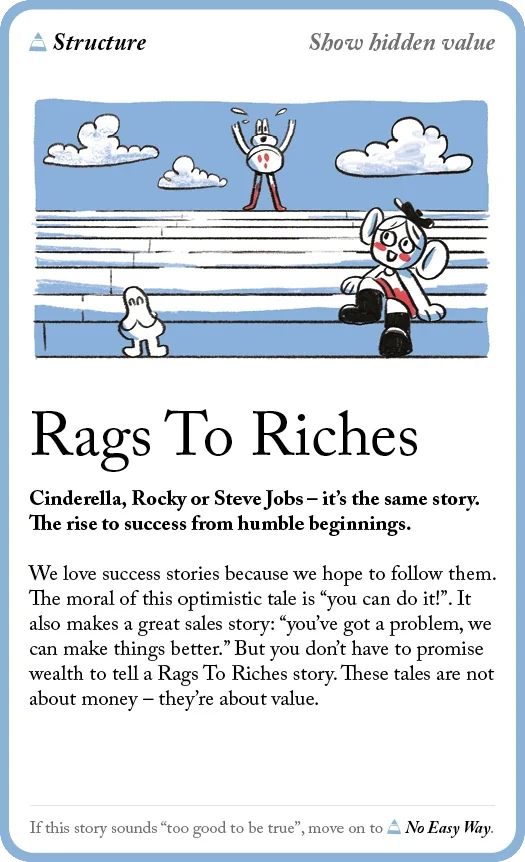

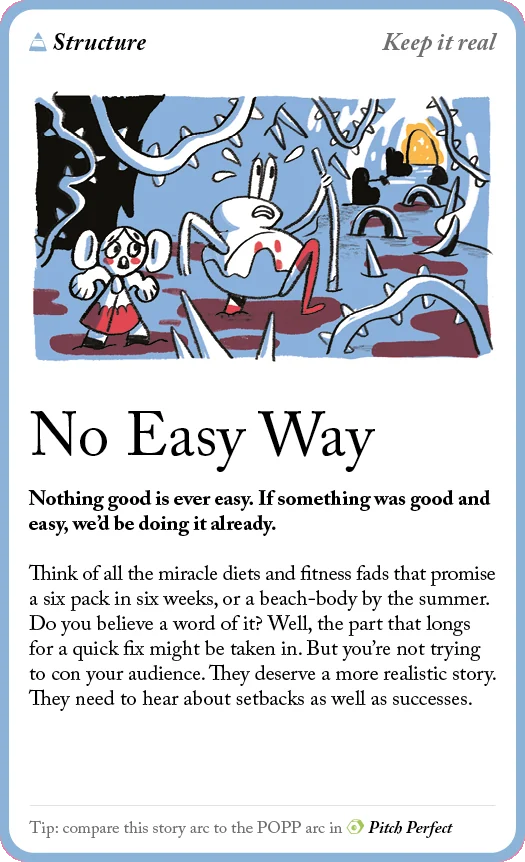
“Stop talking about yourself” is the line that answers Brown’s problem. Every agency can talk about itself, and to a client those talks sound alike. A story about the client belongs to that client alone. The agency that tells it stands apart.
So different they couldn’t say no
The client’s praise in the room was only the start. “They were so thrilled,” Brown says.
Then the call came: her agency had won the business. The client said the approach was “so different from everyone else’s that they couldn’t say no,” Brown says.
Think back to the report. When clients can’t tell agencies apart, they choose on price. Brown’s client could tell, and her agency won on something else.
“This pitch won us a $2,500,000 account all from one card.”
Sheryl Brown
She isn’t the only one
Other Pip Decks owners tell similar stories. Renee Ostertag, chief executive of Green Tree Mind, says in her own video review: “I knew what story to tell in what moment and why and it led to the cleanest, fastest sales process I ever had with a new client.” Her client bought her biggest package, she says, “no questions asked.”
Miquel Carré-Llopis, a business and marketing consultant, picks a Storyteller tactic every day to make his content. “Since then we already signed like five figures clients,” he says.
Even practiced storytellers find something new. Karen Tilstra, an educational psychologist and innovation consultant, had written two books and given hundreds of presentations. “I really thought I knew how to put a story together,” she says, “but with the Storyteller Tactics Pip Decks I found it is easier but more importantly it’s more impactful.”
As for Brown, she has used the tactic ever since. “I use it for every single pitch that we have,” she says. “Every single one.”

Charles Burdett is the founder of Pip Decks and a former UX designer.