![Best Facilitation Courses Worth Your Money [2026]](http://pipdecks.com/cdn/shop/articles/Metaphor-Engine_4535d3a3-71fa-4814-a566-d717de8ff5db_800x567.png?v=1771351779)
![Best Facilitation Courses Worth Your Money [2026]](http://pipdecks.com/cdn/shop/articles/Metaphor-Engine_4535d3a3-71fa-4814-a566-d717de8ff5db_1512x.png?v=1771351779)
If you want to build a workshop business, AJ&Smart's Workshopper Master (around €6,000) is the one to beat. It's the only course that teaches you how to get clients, not just facilitate them. For corporate types, Voltage Control ($5,000) has the strongest alumni network going. And if you're just curious whether facilitation is for you, the University of Minnesota does it for $20.
Why Every Other "Best Facilitation Courses" Article Has a Problem
Almost every "best facilitation courses" list currently ranking on Google was written by a company selling facilitation courses or facilitation software. SessionLab? They sell session-planning tools. Facilitator School? They sell a course that ends up on their own list. AhaSlides? Presentation software.
None of them disclose this.
I don't sell courses or facilitation software. I spent weeks going through 11 programs, reading dozens of Reddit threads, and chasing down actual pricing (which half these companies make deliberately hard to find). So here's what I found.
Things the other guides get wrong: SessionLab is not a course - it's software. Mural and LUMA Institute are the same company. And the IAF CPF is an assessment credential, not a training program. More on all of that below.
Quick Picks: Best Facilitation Courses by Goal
- Building a facilitation business: AJ&Smart Workshopper Master - the only course that teaches you how to sell and price workshops, not just run them
- Corporate / AI-era facilitation: Voltage Control Facilitation Certification - live cohorts, explicit AI curriculum, impressive alumni roster
- Design thinking teams: LUMA Facilitator Certification - but budget for the full ~$4,850 path, not the $2,900 they advertise
- L&D / HR professionals: ATD Training & Facilitation Certificate - recognized across corporate training departments
- Nearly free / testing the waters: University of Minnesota Grow Your Facilitation Skills - $20–$120, surprisingly good
- Global gold-standard credential: IAF CPF - but only if you're already experienced (this is an exam, not a class)
- Expanding your methods toolkit: Liberating Structures Immersion - $270–$495, immediately practical
Quick Comparison: All Facilitation Courses at a Glance
I've included actual total costs, not just the headline numbers that most guides show you.
| Course | Price | Duration | Format | Best For |
|---|---|---|---|---|
| AJ&Smart Workshopper Master | ~$6,345 (€6,000) | Self-paced + 6-month community | Online + live coaching | Building a facilitation business |
| Voltage Control Certification | $5,000 (non-refundable) | 3 months (Fridays, live) | Online cohort | Corporate leaders, AI-era facilitation |
| LUMA Facilitator Certification | ~$4,850 total (prereq + cert) | 3–4 months | Online | Design thinking / innovation teams |
| ATD Training & Facilitation | $2,245–$2,545 | 2–3 days (in-person) or 2–3 weeks (online) | In-person or live online | L&D and HR professionals |
| Soliya Advanced Facilitation | $2,500 (full path) | 19+ weeks | Online (Zoom + async) | Cross-cultural dialogue facilitation |
| Facilitator School Masterclass | $1,585–$2,115 (€1,500–€2,000) | 6 weeks | Online cohort (max 12) | Mid-level facilitators wanting cohort learning |
| ICA Associates Program | ~$3,590 USD (CAD $4,788) | 10 days across 3 courses | In-person, online, or self-directed | Preparing for IAF CPF |
| IAF CPF Credential | ~$1,500 + $200/year | Assessment-based | In-person or online assessment | Experienced facilitators seeking recognition |
| Trainers Toolbox Advanced | $1,425–$1,530 (€1,350–€1,450) | 2 days | In-person (London/Amsterdam, max 8) | Experienced trainers wanting intensive feedback |
| Liberating Structures Immersion | $270–$495 | 1–4 weeks | In-person or online | Expanding your facilitation toolkit |
| University of Minnesota - Grow Your Skills | $20–$120 | 4 weeks / 6 hours | Online (Zoom) | Beginners, community organizers |
Which Facilitation Course Is Right for You?
The right facilitation course depends entirely on what you're trying to do with the skill. Every other guide just lists courses and lets you figure it out.
"I want to run better meetings at my company." You don't need a $5,000 certification. Start with the University of Minnesota course ($20–$120) or a Liberating Structures Immersion ($270–$495). Both give you immediately usable techniques. If your company will pay for it, ATD's certificate adds a credential your L&D department will recognize. You might also find that a practical card deck like Workshop Tactics gets you running better sessions faster than any online course.
"I want to become a freelance facilitator." This is where Workshopper Master genuinely stands apart. It's the only program that teaches the business side - how to price workshops, find clients, and build a sustainable practice. Other facilitation courses teach you to facilitate. This one teaches you to make a living at it too. According to AJ&Smart's own data, 44% of graduates earned more money, with an average $30k income increase.
"I need a globally recognized credential." The IAF Certified Professional Facilitator (CPF) is the gold standard worldwide. But remember - it's an assessment, not a course. You need at least 7 completed workshops just to apply. If you need training first, ICA Associates specifically prepares you for the IAF CPF exam.
"I work in design thinking, product, or UX." LUMA's Facilitator Certification was built for this. Just know that the real cost is ~$4,850 because you need the Practitioner Certification first. Most guides only tell you $2,900.
"I want to facilitate across cultures." Soliya is purpose-built for cross-cultural dialogue - the only program on this list designed specifically for it.
On a tight budget? University of Minnesota, no question. Supplement with Liberating Structures' free online resources and AJ&Smart's excellent free YouTube content.
The Best Facilitation Courses - Detailed Reviews
1. AJ&Smart Workshopper Master - Best for Building a Facilitation Business
Price: ~$6,345 (€6,000) | Format: Self-paced video + live coaching calls + 6-month community | Link: workshopper.com
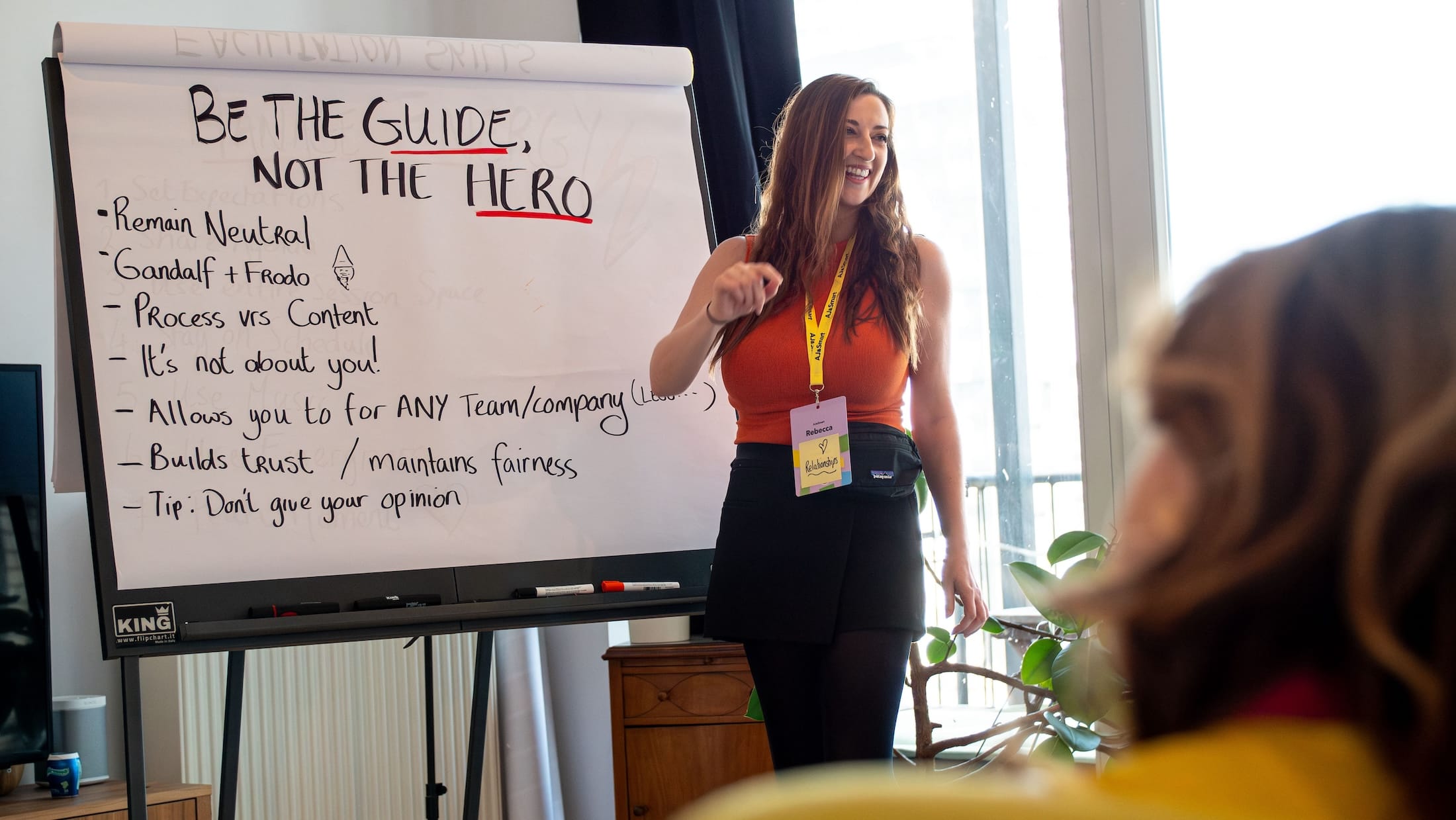
The Workshopper Master course gets more discussion on Reddit than any other facilitation program - and that discussion is polarized.
The course teaches facilitation skills, but what sets it apart is the business curriculum. How to price your workshops and find clients who don't know they need a facilitator. No other course on this list covers this ground, and for freelance facilitators, this is often the harder problem.
The community and live coaching calls are where most graduates say the real value lives. On Reddit, graduates consistently say the self-paced videos are solid but the peer network and coaching access are what justify the price.
Key insight: Most facilitation courses assume you already have clients. Workshopper Master is the only one that teaches you how to get them - and how to price your work so the business actually sustains itself.
Honest cons: The price isn't listed on the website - you have to book a discovery call to learn it, which is a friction point that annoys people (understandably). At ~$6,345, it's the most expensive option on this list for a self-paced course. And the sales-y onboarding process feels at odds with the quality of the actual content.
Who it's for: Freelancers and consultants who want to build or grow a facilitation business. If you're an internal facilitator at a company who will never sell a workshop, the business-building modules won't apply and you should look elsewhere.
Even if freelancing isn't on your radar, most of the curriculum still applies in a corporate setting. Getting buy-in from stakeholders, managing difficult group dynamics, structuring sessions that produce actual outcomes - that's useful whether you're billing clients or running your team's quarterly planning.
2. Voltage Control Facilitation Certification - Best for AI-Era Corporate Facilitators
Price: $5,000 (non-refundable) | Format: 3-month live cohort (Fridays) | Spring 2026 cohort starts April 3
Voltage Control is the only facilitation certification that explicitly addresses how AI is changing the field. Their curriculum includes a "Facilitating with AI" elective, and in 2026, that matters.
The alumni roster is impressive - a Nike VP, Autodesk's Chief of Staff, ADL's National Director. The program is cohort-based and live, so you get actual peer relationships and real-time feedback.
Honest cons: $5,000 with no refund option is a big commitment. The Friday schedule works well for corporate folks but is brutal for freelancers juggling client work. And the AI content, while forward-thinking, is still a relatively small part of the overall curriculum.
Who it's for: Corporate leaders and executives who want facilitation skills plus the credibility of a serious professional cohort. Particularly strong if you're navigating how AI fits into collaborative work.
3. LUMA Facilitator Certification - Best for Design Thinking Practitioners
Price: ~$4,850 total (not $2,900) | Format: Fully online | 2026 sessions available Feb–April
LUMA Institute is now a Mural company. If you see "Mural facilitation certification" mentioned elsewhere, they're talking about this.
The LUMA system of 36 human-centered design methods is useful for product and innovation teams. The problem is pricing transparency. Most guides quote $2,900 for the Facilitator Certification, but you need the Practitioner Certification first (~$1,950). Total real cost: approximately $4,850. That's a 67% difference that matters.
Honest cons: The prerequisite requirement means a longer and more expensive path than advertised. The methods are powerful but specifically designed for design-thinking contexts - if that's not your world, this isn't your course.
Who it's for: People already working in design thinking, product development, or corporate innovation who use (or want to use) the LUMA System.
4. IAF Certified Professional Facilitator (CPF) - The Gold Standard Credential
Price: ~$1,500 + $200/year membership | Format: Assessment-based
Important: The IAF CPF is an assessment credential, not a training course. You must already be an experienced facilitator with at least 7 completed workshops in the past 3 years to apply. Do not start here if you're new to facilitation.
The IAF CPF is to facilitation what the PMP is to project management - the globally recognized professional credential. But unlike every other entry on this list, there's no curriculum. No one teaches you anything. You demonstrate that you already have the competencies through a rigorous assessment process.
Who it's for: Experienced facilitators who want formal recognition of their skills. Particularly valuable for consultants working internationally where the IAF name carries weight.
5. ATD Training & Facilitation Certificate - Best for L&D Professionals
Price: $2,245–$2,545 | Format: 2–3 days in-person or 2–3 weeks online
The Association for Talent Development is the professional body for corporate training. Their certificate is recognized across L&D and HR departments in ways that niche facilitation certifications aren't. If you work inside a corporate training function, this credential speaks the language of your industry.
Honest cons: Very much focused on corporate training facilitation rather than workshop facilitation broadly. The content skews toward traditional classroom-style facilitation, not the design-sprint or innovation-workshop end of the spectrum.
6. Facilitator School Masterclass - Best Mid-Priced Online Cohort
Price: $1,585–$2,115 (€1,500–€2,000) | Format: 6 weeks, online, max 12 people
Small cohorts mean real attention. The 12-person cap is a real advantage over larger programs, and the 6-week timeframe is long enough to practice between sessions without dragging on.
Honest cons: Facilitator School writes "best facilitation courses" articles that feature their own course without disclosing this - which is exactly the conflict of interest problem mentioned at the top. The course itself is solid. The marketing approach is less so.
7. The Rest Worth Knowing About
Liberating Structures Immersion ($270–$495): Not a certification - it's a toolkit expansion. The 33 Liberating Structures are genuinely brilliant facilitation methods, and an immersion workshop teaches you to use them. Best bang-for-buck on this list if you already facilitate and want new techniques.
ICA Associates (~$3,590 USD): Specifically designed to prepare you for the IAF CPF. If that credential is your goal, this is the most direct path.
Soliya ($2,500): The only program designed for cross-cultural dialogue facilitation. 19+ weeks is a serious time commitment but the specialization is unmatched.
Trainers Toolbox ($1,425–$1,530): Two days, maximum 8 participants, in London or Amsterdam. If you want intensive in-person feedback on your facilitation from a small group, this is it. Next sessions: March and August 2026.
University of Minnesota ($20–$120): The best deal in facilitation education. Pay-what-you-can pricing, 4 weeks, solid foundations. Next session: April 2026. Perfect for testing whether facilitation is for you before dropping thousands on a certification.
Is Facilitation Certification Worth It? The Honest Answer
Nearly half of working facilitators have no certification at all (SessionLab's data, not mine). Clients hire facilitators who get results, not facilitators with nice certificates.
Key insight: Certification matters most when selling to corporate clients who need to justify the spend internally. A credential removes the "why should we hire you?" objection. If you're an internal facilitator, your track record matters more than any certificate.
That said, certification can be worth it in specific situations. If you're a freelancer trying to justify premium rates to corporate clients, a recognized credential removes objections. Workshopper Master graduates report an average $30k income increase - that makes €6,000 a reasonable investment if you're serious about the business.
If you're an internal facilitator at a company, your employer probably cares more about whether your meetings produce outcomes than what certificate you hold. Start with a cheaper course, get good at actually facilitating, and invest in credentials later if your career path demands it.
Reddit's r/facilitation and r/managers both say the same thing: don't spend $5,000+ on a course until you've facilitated at least a few real workshops. Without real experience, you won't even know what questions to ask.

Already facilitating? Get better methods.
Workshop Tactics gives you 54 structured methods for running better workshops - no certification required. Used by facilitators at Google, Netflix, and the BBC.
Get Workshop Tactics →How Much Does Facilitation Training Cost?
Facilitation training ranges from essentially free to over $6,300 depending on the depth and format. By budget tier:
- Free–$120: University of Minnesota ($20–$120), Liberating Structures free online resources, AJ&Smart's free YouTube content
- $270–$500: Liberating Structures Immersion workshops
- $1,400–$2,500: Trainers Toolbox, Facilitator School, ATD Certificate, Soliya
- $3,500–$5,000: ICA Associates, LUMA full path, Voltage Control
- $6,300+: AJ&Smart Workshopper Master
The price doesn't always correlate with quality. The University of Minnesota course at $20 is better than some $2,000 programs. What you're paying for at the higher tiers is usually some combination of: community access, live coaching, business-building content, or a recognized credential.
You might not need a course at all, just better methods. Workshop Tactics gives you 54 facilitation techniques as a physical card deck for around $260. It won't teach you facilitation theory or hand you a certificate, but if your team already runs workshops and just needs better activities to fill them with, it costs less than a single day of most training programs listed above.
Free Ways to Learn Facilitation Before You Spend Anything
Before committing money, start here:
- Liberating Structures: All 33 methods are documented free online, with full instructions
- AJ&Smart YouTube channel: Genuinely excellent free content on workshop facilitation from the same team behind Workshopper Master
- Pip Decks YouTube channel: 20+ hours of workshop tutorials covering icebreakers, retrospectives, ideation sessions, and core facilitation techniques
- SessionLab's activity library: Free searchable database of facilitation activities (remember - SessionLab is a planning tool, not a course, despite what some guides imply)
- IAF Methods Library: The International Association of Facilitators maintains a free methods database
- r/facilitation on Reddit: The most honest facilitation community online, with real practitioners sharing what actually works
You can learn a surprising amount for free. The paid courses add structure, accountability, community, and (sometimes) credentials - but the raw knowledge is already out there. If you want a physical deck of ready-to-use methods you can pull out mid-session, Workshop Tactics is where experienced facilitators tend to land.

A Note on "AI Facilitation" (Be Skeptical)
There's a lot of talk right now about "AI-powered facilitation" and tools that claim to replace human facilitators. Most of it is rubbish. Facilitation is a human-led craft. Reading a room and knowing when to push a group versus when to back off - these are skills that require physical presence and emotional intelligence that no algorithm replicates.
Sure, AI can help with the admin side. Summarising meeting notes after a session and generating follow-up action items. Legitimate time-savers for virtual facilitation. But the actual work of standing in a room full of people with competing priorities and guiding them toward a shared outcome? No tool replaces that.
Facilitation is an AI-proof career path. While other knowledge work gets automated, the demand for someone who can get 15 opinionated people aligned in a room is only growing. Companies are cutting routine meetings but investing more in well-facilitated strategic sessions. If you're looking at facilitation as a career move, the AI trend is working in your favour, not against it.
Remote facilitation tip: AI tools like Otter.ai or Fireflies can save you hours on post-session documentation. Use them for transcripts and summaries after the fact. But nothing substitutes you being in the room (or on the call) reading body language and managing energy. Post-session admin is the bit AI can actually handle.
Frequently Asked Questions
What qualifications do I need to become a facilitator?
None. There's no licence and no required certification. Can you walk into a room and help a group reach a useful outcome? That's what the market cares about. Courses help you develop the skill and signal competence to clients, but plenty of successful facilitators started by simply volunteering to run meetings better.
How much do facilitators earn?
Facilitator salaries vary enormously based on whether you're internal or freelance. Internal corporate facilitators typically earn $65,000–$95,000 depending on seniority and industry. Freelance facilitators charge $2,000–$10,000+ per workshop day, though income is inconsistent and depends heavily on your client pipeline. Workshopper Master reports their graduates see an average $30k annual income increase after completing the program.
Are facilitators in demand in 2026?
Yes. As AI handles more routine knowledge work, the ability to get a room full of people aligned on something ambiguous is becoming more valuable, not less. Companies are cutting meeting bloat but investing more in well-facilitated strategic sessions. Voltage Control's curriculum addresses this directly with its "Facilitating with AI" elective.
Can I learn facilitation entirely online?
Yes. Most courses on this list are fully online, and several (Workshopper Master, LUMA, Facilitator School) are online-only. You will miss the energy of a physical room though. If you can manage it, at least one in-person workshop - even a Liberating Structures immersion - is worth it for feeling the difference between reading about facilitation and doing it.
What's the difference between facilitation and training?
Training transfers knowledge from expert to learner. Facilitation guides a group toward their own insights - you don't need to be the subject matter expert. Most professionals blend both. ATD's certificate suits training roles; the rest of this list suits facilitation roles.
What are the 4 P's of facilitation?
The 4 P's are Purpose (why are we here?), Product (what will we produce?), Process (how will we work together?), and People (who needs to be involved and what do they need?). It's a simple framework for planning any facilitated session. Every course on this list teaches some version of this, though they may use different terminology.
How do I start facilitating with no experience?
Start by volunteering. Run a retrospective for your team. Facilitate a brainstorm for a nonprofit. Offer to lead the agenda at your next department meeting. The University of Minnesota course ($20–$120) gives you enough technique to get going, Liberating Structures provides free methods, and a practical toolkit like Workshop Tactics gives you 54 ready-to-use session formats you can pull out mid-workshop. Build a small portfolio of real sessions before investing in expensive certification - you'll get more from the course once you have experience to reflect on.
Which facilitation certification is most recognized?
The IAF Certified Professional Facilitator (CPF) has the widest global recognition across industries. In the corporate and tech world specifically, Voltage Control's certification is gaining significant traction, particularly among Fortune 500 companies. For L&D departments, the ATD certificate speaks their professional language. There's no single "best" credential - it depends on whose recognition matters in your specific career context.


One of the few newsletters I look forward to.
— Dave Cunningham, Head of DesignOps @ NHS