- Home
- Workshop Tactics
- Empathy Map
Empathy Map
Table of contents
What is Empathy Map?
Empathy Map is a card from the Workshop Tactics deck by Pip Decks.
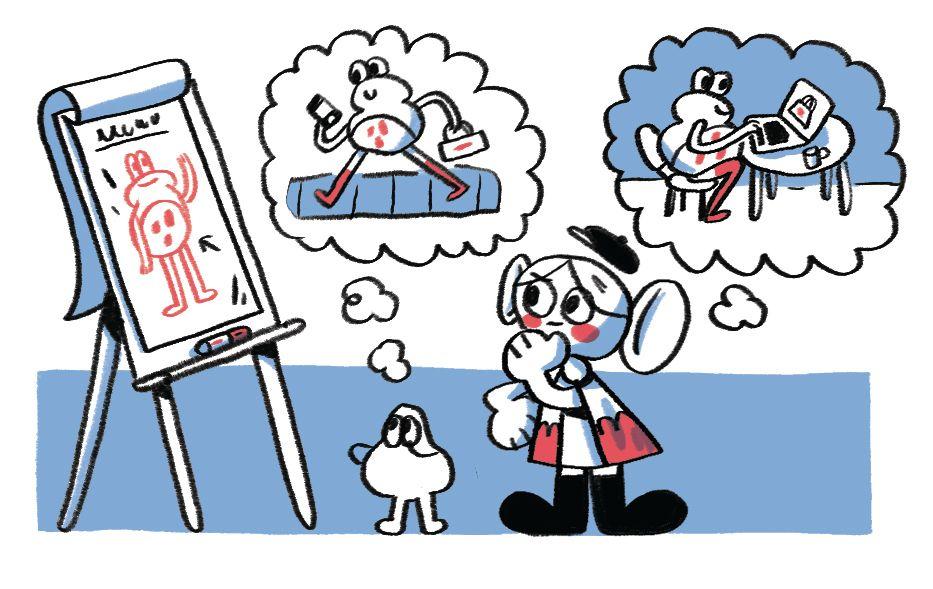
Getting people inside the mind of the person they are solving a problem for affects the solutions and ideas people come up with. Besides, encouraging people to cultivate empathy in general just might make the world seem a tiny bit less scary and divided.
Before, try Problem Statement to give you a clear problem to help you define your user’s goal. Afterwards, put your biggest assumptions about your user onto an Assumption Map.
When to use Empathy Map
- Lack of understanding of customer needs
- Product development stalling due to unclear user requirements
- High customer churn due to unmet expectations
- Need for user-centered design in new product launches
- Difficulty in aligning team perspectives on user goals
- Feedback indicating misalignment with market needs
- Desire to innovate based on user insights
How to use Empathy Map
-
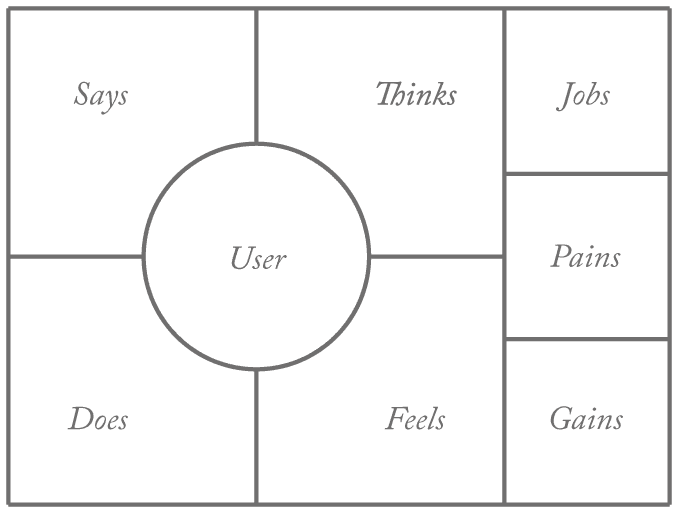
Draw the following on your shared workspace:
-
Write the user’s goal in the middle (e.g., ‘ buying a TV’).
-
Ask the group to spend ten minutes writing down their assumptions, one per sticky note, for each section.
What is the user saying/thinking/doing/feeling about their goal?
What jobs do they need to do? (E.g., entertain the kids.)
What pains do they have achieving their goal? (E.g., too much tech jargon.)
What would they gain from achieving it? (E.g., peace and quiet.)
-
Ask each participant to stick up and talk through their assumptions. Theme Sort as you go.
-
Use Assumption Map to decide which assumptions about your user you need to validate first.