
- Home
- Workshop Tactics: the best problem-solving workshops in a box
Workshop Tactics: the best problem-solving workshops in a box

Workshop Tactics is a curated list of the best agile and design-thinking workshop techniques to help you lead your product team. Written by design consultant and Pip Decks founder, Charles Burdett.
Designed to guide you through the design process using group facilitation activities, each tactic can be used independently as a mini-workshop, or combined with multiple tactics to create Sessions.
You’ll find: creative ideation workshops, energisers, icebreakers, retrospectives, root-cause analysis workshops, decision-making matrices and core facilitation techniques.
Find out why our customers love Pip Decks so much.
Workshop Strategy System
- Do you know clearly what your team is working towards? No: Goals
- Do you know the biggest problem you face? No: Understand
- Are you able to articulate your problem clearly? No: Frame
- Do you have a range of ideas on how to solve it? No: Ideas
- Have you assessed if your ideas are robust? No: Evaluate
- Have you decided which ideas to test? No: Decide
- Make a prototype and test your idea.
Categories
 Recipe
Various ways to string multiple tactics together to make a longer, more in-depth workshop.


Idea Storm
Put a problem through its paces by gathering lots of ideas, then narrowing down and evaluating them.
3-4 hours


Retrospective
Look back on successes and failures in order to learn and improve for next time.
1-2 hours
 Goals
Agree on a desired end-state to work towards, so daily activity is moving you in the right direction.


Newspaper Headline
Think about the company’s future by predicting what the press might say on their front pages.
30 mins

Objectives and Key Results
Create radical focus for your team by agreeing on an objective and actively measuring progress towards it.
1 hour

Sailboat
Find out what your goals really are, the reasons behind them and what’s stopping you from achieving them.
1 hour

Sticky Steps
Start with your goal and work backwards to give you a clear path on how to get there.
30 mins
“It’s really valuable to have the physical deck. It can be kept on me and browsed, and not hidden away on a website.”
 Simon HurstUX Researcher
 Understand
Unpack problems and discover insights with critical and analytical thinking exercises.

Assumption Collecting
Collect assumptions that reflect what you and your team think might be true about the project.
1 hour


Service Map
Create a map of a service to understand it better, and identify opportunities for improving processes.
1-2 hours


Prototype Persona
Try to predict who is using (or will use) your product and why, so you can start testing with the right people.
1 hour

Stakeholder Map
Identify a project’s stakeholders. Anyone who can significantly impact a decision, or who may be impacted by it, needs to be considered.
1 hour

Roles and Responsibilities
Understand each other’s roles better, and learn who is responsible for what.
1 hour

Skills Market
Learn about each other’s skills, abilities and ambitions, so you can understand how to help each other grow.
1 hour

Hopes and Fears
Understand your team’s expectations and hesitations so you’re all on the same page before you take flight on a new journey.
30 mins

Five Whys
When faced with a problem that is affecting a project, ask “Why?” five times to get to the root cause.
30 mins - 1 hour
“The Workshop Tactics card deck gives me, in the palm of my hand, a thoroughly researched and structured set of methods that bring people together to creatively solve problems.”
 Markus Karlsson-Jones.MMU
 Frame
Articulate your problem or experiment in a clear way, so as to make it easier to start solving or testing.

Problem Statement
A problem statement that captures the project’s goals, problems and measurable success criteria.
1 hour

Hypothesis Statement
Treat your assumptions as experiments by turning them into testable hypotheses.
30 mins


Value Proposition
Clearly articulate the point of your service or product, who it’s for and what makes it unique.
1 hour
“Workshop Tactics is the first thing I reach for when presented with a design problem. The solution is always in there. I can’t live without them.”
 Tom NewtonDesign Lead, eBay.
 Ideas
Encourage coming up with lots of ideas, then refine the best into more detail.

Mind Map
Turn all your thoughts into an interconnected map so you have stimulus for idea generation.
30 mins


Storyboard
Draw your idea as a sequence of key moments and real world interactions to better understand how it works.
1-2 hours


Get 20+ hours of recorded workshop tutorials to boost your facilitation confidence.
 Evaluate
Assess problems or ideas against certain criteria to understand them better.

Premortem
Think about all the ways something might go wrong, so you can effectively plan to stop it from happening.
1 hour

Rose, Thorn, Bud
Evaluate something’s positives, negatives and opportunities. Such as an idea, project or a process.
30 mins

SWOT Analysis
Identify strengths, weaknesses, opportunities and threats for a desired end state.
1-2 hours


Get the card deck - used by the BBC, Lyft, Facebook, IDEO and many more
 Decide
Prioritise ideas or problems based on your needs in order to decide what to focus on.


Impact Effort Map
Group together ideas by how much effort they require to create, and by how much impact they’ll have on your goal.
30 mins - 1 hour


Secret Vote
Democratically make decisions as a group. Eliminate all but one thing, or find the top three things.
5 mins
 Discuss
Facilitate discussion to gain a better understanding of a team and progress towards goals.

Democratic Discussion
Build a discussion agenda together and keep track of what’s been discussed, and needs to be discussed.
1 hour




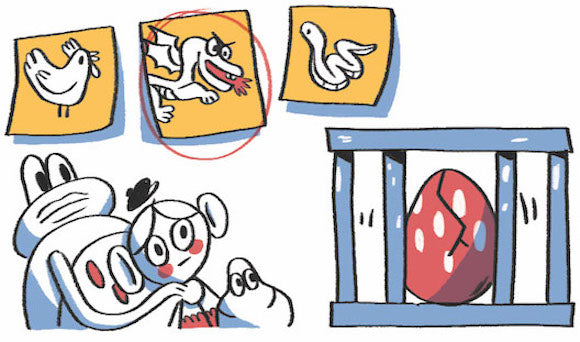
Three Little Pigs
Reflect on what’s going well, and what could be improved with the help of a childhood fable.
1 hour
Get the card deck - used by the BBC, Lyft, Facebook, IDEO and many more
 Technique
Core techniques that are fundamental to facilitating a successful workshop.

Workshop Checklist
Remind yourself what you need to do before, during and after a workshop.

Session Principles
Creating principles for a meeting or workshop is a 5-10 minute investment resulting in an engaged, productive and more effective group of people.
5-10 mins

Difficult Behaviours
Manage behaviour that derails discussions.


Ice Breakers
Warm up the room to make people more willing to contribute to the session you are about to run.
10 mins


Parking Lot
Keep meetings and workshops on track by “parking” irrelevant questions or topics.
